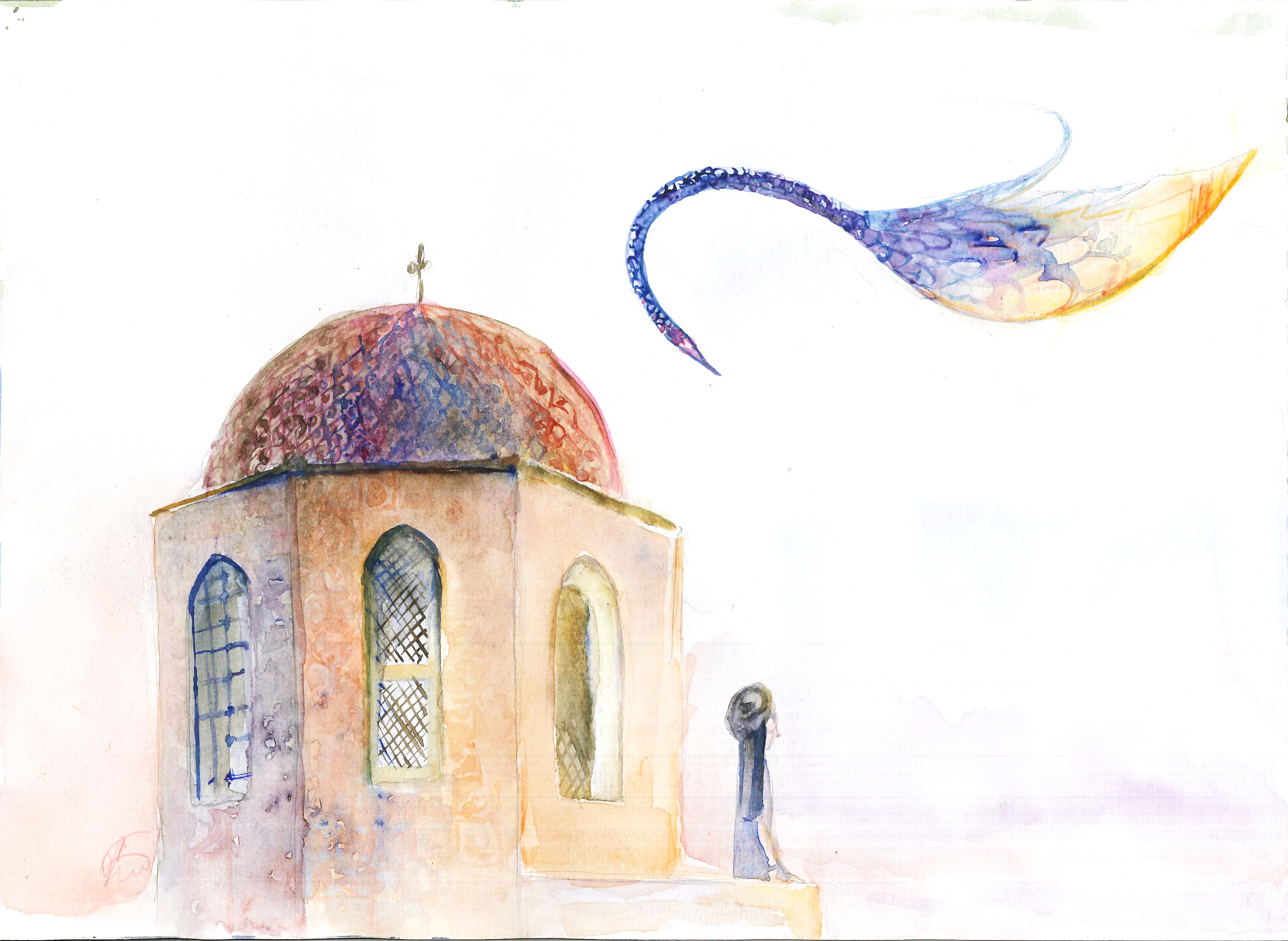
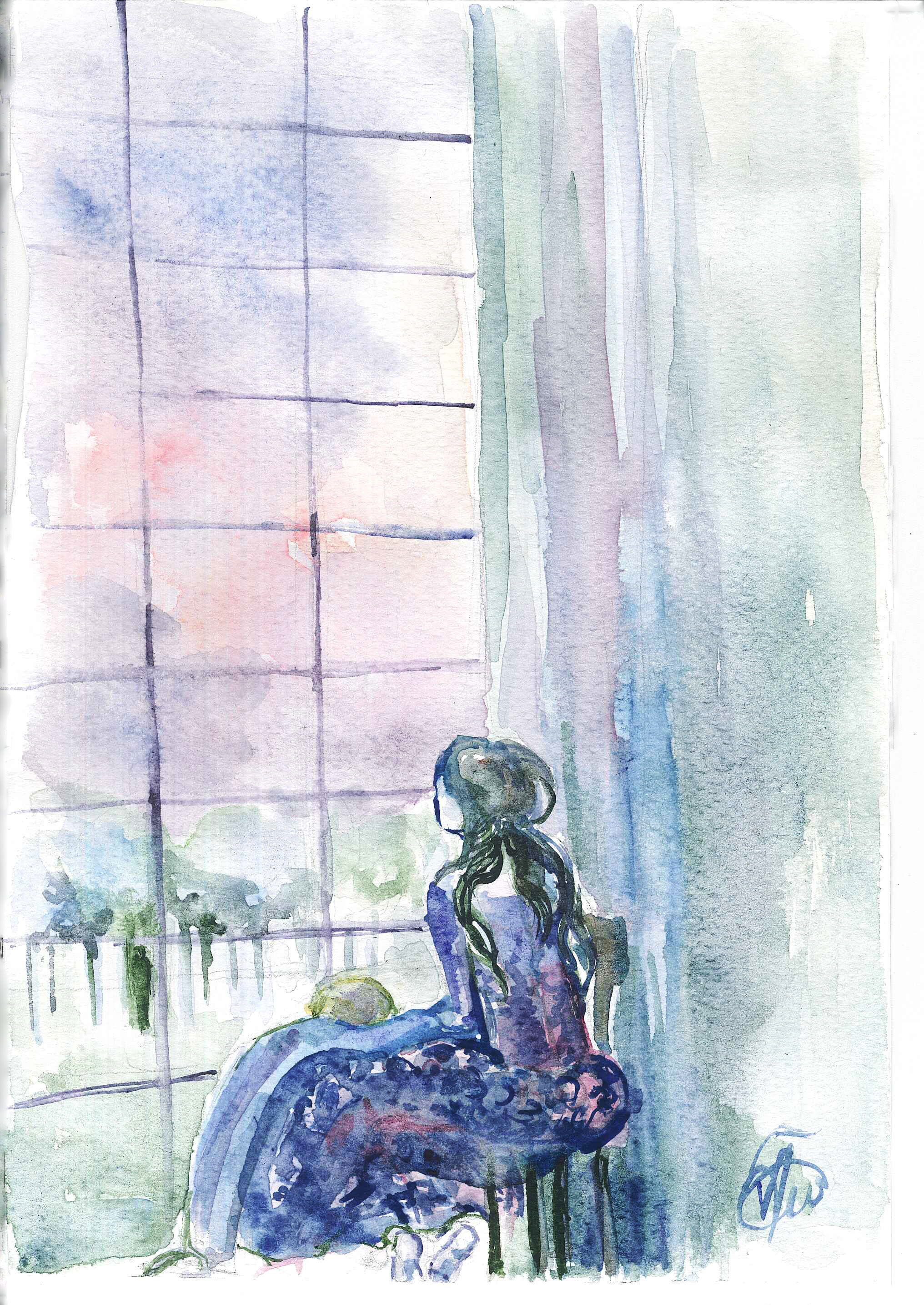
Tag: illustrazione
La messa
Catherine
I went, at the earliest opportunity, and besought him to depart; affirming that Catherine was better, and he should hear from me in the morning how she passed the night.
‘I shall not refuse to go out of doors,’ he answered; ‘but I shall stay in the garden: and, Nelly, mind you keep your word to-morrow. I shall be under those larch-trees.’
Emily Brontë
La rencontre
Une porte
A la fenêtre
Wuthering Heights
Wuthering Heights is the name of Mr. Heathcliff’s dwelling. ‘Wuthering’ being a significant provincial adjective, descriptive of the atmospheric tumult to which its station is exposed in stormy weather. Pure, bracing ventilation they must have up there at all times, indeed: one may guess the power of the north wind blowing over the edge, by the excessive slant of a few stunted firs at the end of the house; and by a range of gaunt thorns all stretching their limbs one way, as if craving alms of the sun. Happily, the architect had foresight to build it strong: the narrow windows are deeply set in the wall, and the corners defended with large jutting stones.
Emily Bronté
Mansfield Park
Mary Poppins
Victoria and Albert
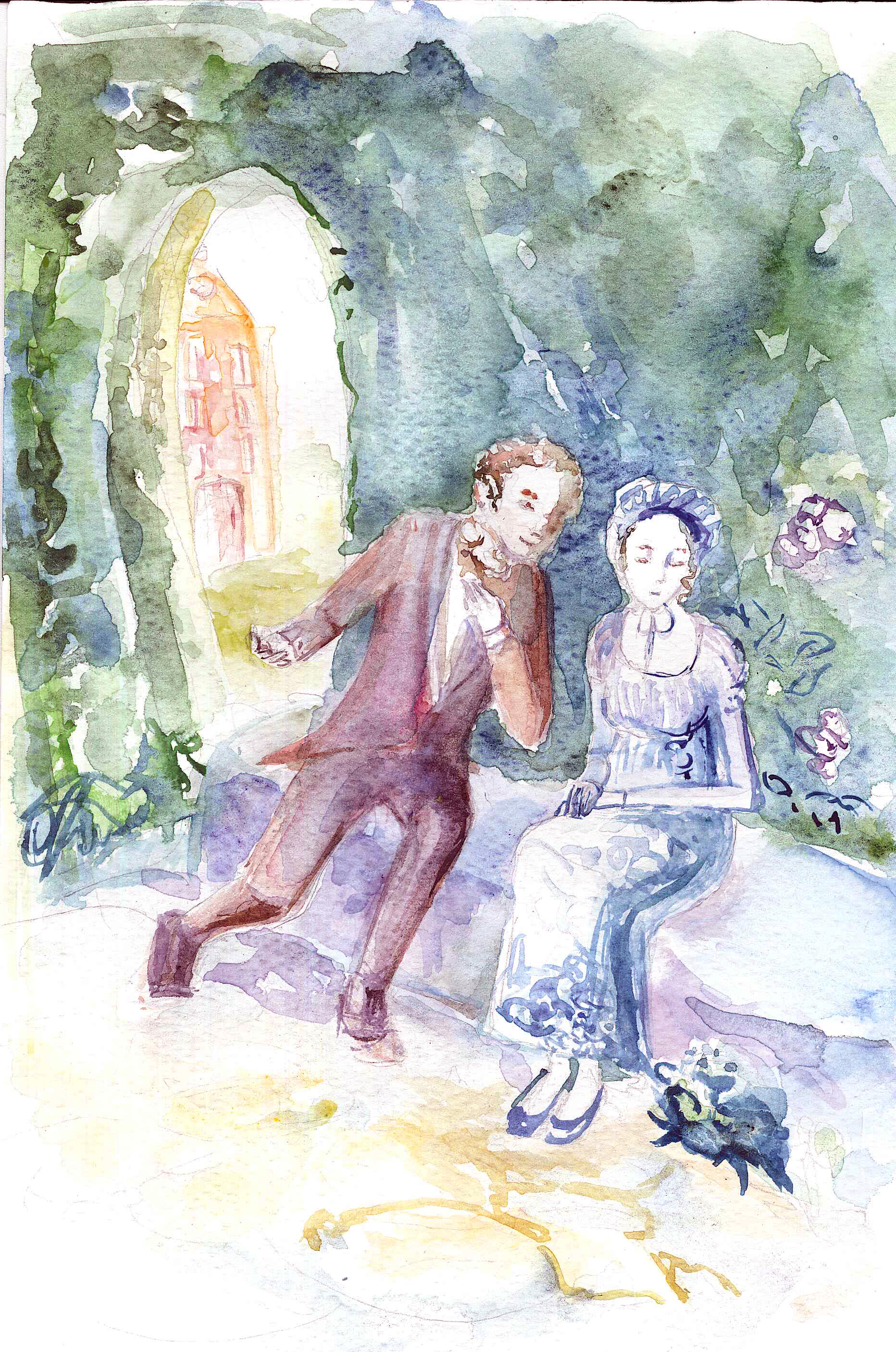
J’ai ces deux amis très amoureux. Ils adorent l’art et l’histoire. Ils se rencontrent tous les dimanches dans un lieu où personne ne les trouvera. C’est la culmination de leur amour : meubles décorés, tableaux vieillis, robes baroques, papiers jaunis, silence et marbre par tout. Là ils sont entre amis, parmi ces objets qui ont tous des histoires riches et colorées comme la leur. Il, avec chapeau velouté et elle longue robe style empire, passent les heures à contempler le baiser dessiné par Sir John Everett Millais, sculpté par Auguste Rodin, les danses étonnantes des belles perses et les reflets solaires des colonnades en verre. Ils se promènent, se transforment, prennent autres vies en autres matières.
Epanouis, ils sentent que l’heure est venue pour toucher le temps de leur contemporain. Gens d’aujourd’hui les entourent, eux aussi partis et étonnés d’y revenir. Dans un jardin vert, sous le soleil brillant, ils s’assoient sur l’herbe pour regarder dans l’eau les reflets des murs rouges et écouter les voix de la ville des 2000. Elle garde tous leur souvenirs et leur promet un avenir très amoureux.
Murakami. De la course au mouton sauvage au 1Q84
Ce roman est daté de 1982 quand Murakami commençait à se faire connaitre en France mais jouissait déjà d’une large reconnaissance japonaise ainsi que internationale. Toutes les caractéristiques de son écriture sont lisibles dans ce texte de fiction entre le fantastique, la psychologie et l’avventure.
A la sortie du roman certains trouvent flagrante l’influence de la littérature contemporaine américaine sur l’écriture de Murakami. Aujourd’hui est largement diffusé l’opinion qu’il est un auteur japonais de littérature américaine et, encore moins flattant : de « culture » consommatrice. Lors que les chercheurs tendent à expliquer avec la pop culture le succès d’un des auteurs japonais le plus vendus au monde, il ne faut pas oublier que dans les années ’80 il était très hautement apprécié par toute l’élite littéraire.
Tous les grands écrivains ont trouvé des repaires dans les grands écrivains qui leur précédaient. Souvent ils ont entrepris le chemin de l’écriture après des traductions et des découvertes de l’œuvre de quelqu’un qui leur a donné les ailes. Pour Murakami c’étaient Fitzgerald et Capote. Il est dommage de découvrir l’œuvre de Murakami seulement à travers ces analogies.
La course au mouton sauvage est un roman-fable amusant et absurde, frais et jeun. Ces œuvres suivants commenceront à signaler des prétentions philosophiques, connaissance de la nature humaine et prévisions sombres sur ce qu’elle va devenir. Mais non La course au mouton sauvage. Un des talents de Murakami est de tisser des atmosphères bizarres, dans des mondes surréels et de gagner toute la confiance du lecteur pour l’emporter. Ici aussi, c’est plus le parcours que le final qui compte. Même si Murakami s’inspire ouvertement de la culture occidentale il pose ses situations avec tellement de franchise que peut choquer quelqu’un habitué à la finesse et le langage voilé de la prose occidentale. Un homme habillé en mouton ne peut que faire sourire ou frémir, rappelant peut être David Lynch mais pas Proust malgré le respect que Murakami nourrit pour ce dernier.
Dans ce premiers temps le vin français et la musique britannique ne sont pas encore devenus surexploités dans ses textes et on les accepte avec tolérance. Le chianti et tous les produits occidentaux, chers et apparemment symbole de lux en Japon sont énumérés pas toujours selon les règles du bon gout. Mais encore, ce n’est pas grave, il y en a d’autre qui fait apprécier les histoires magiques de Murakami.
C’est justement pour ça que 30 ans plus tard la sortie de 1Q84 se relève une surprise. C’est comme si il y avait beaucoup à dire mais au cours du chemin tout a perdu du sens. 1Q84 est la reprise de La course au mouton sauvage mais développé en XXL. Dans l’un c’est un mouton, dans l’autre c’est une chèvre qui cache des pouvoirs surnaturels. Des petits hommes qu’en sont derrière, mais pas beaucoup de plus pour nous suggérer le pourquoi du tout. Beaucoup de phrases inspirant aux aphorismes mais sans les devenir pour autant.
Du coup, lisez le mouton, il contient plus d’émotion et d’originalité dans 300 pages de ce que nous propose la chèvre dans les 800 pages de 1Q84.
Ole Lukøie, H. Ch. Andersen
Dans le monde entier, il n’est personne qui sache autant d’histoires que Ole Ferme-l’œil. Lui, il sait raconter….
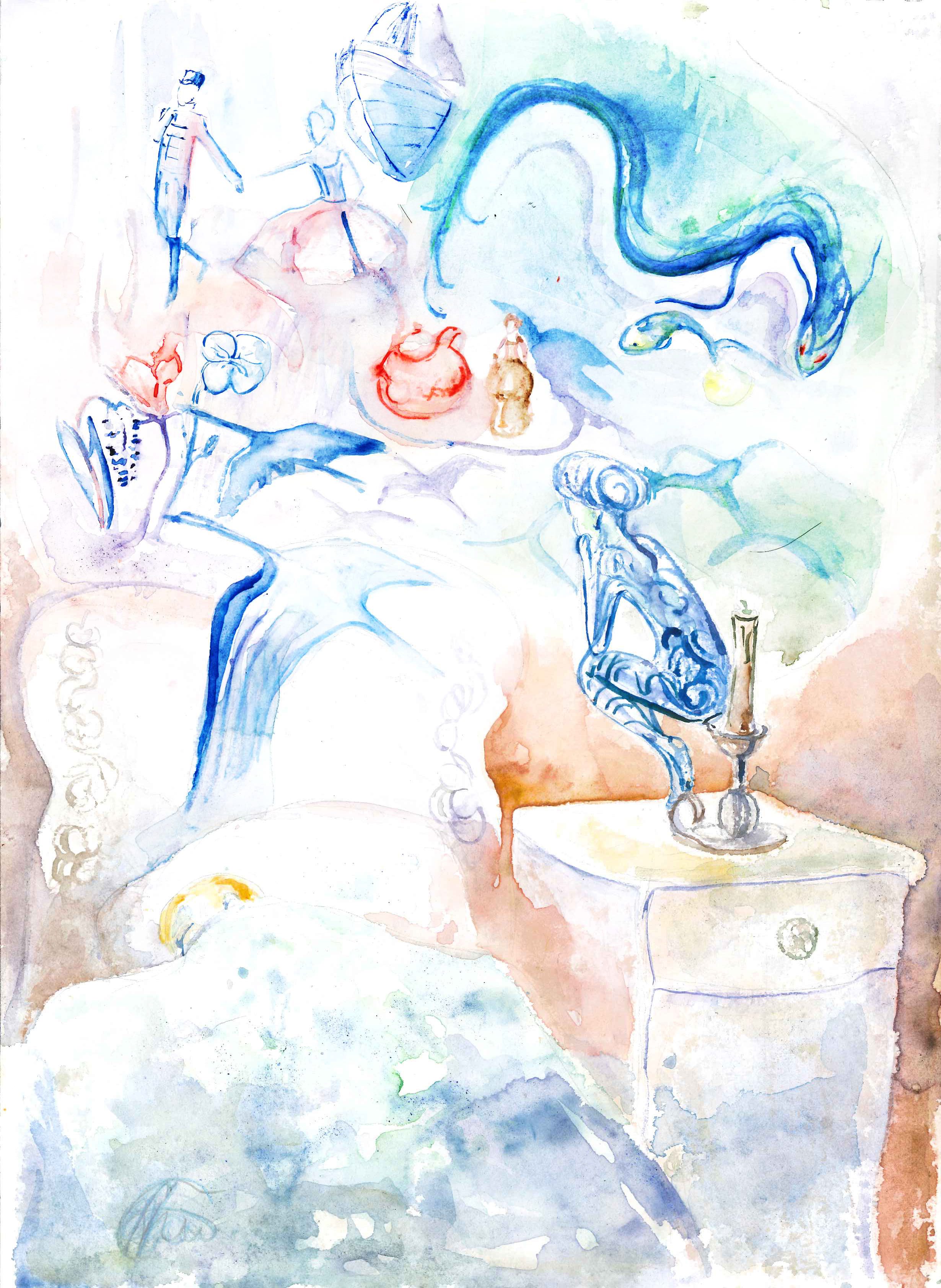
Vers le soir, quand les enfants sont assis sagement à table ou sur leur petit tabouret, Ole Ferme-l’œil arrive, il monte sans bruit l’escalier —il marche sur ses bas—il ouvre doucement la porte et pfutt! il jette du lait doux dans les yeux des enfants, un peu seulement, mais assez cependant pour qu’ils ne puissent plus tenir les yeux ouverts ni par conséquent le voir; il se glisse juste derrière eux et leur souffle dans la nuque, alors leur tête devient lourde, lourde—mais ça ne fait aucun mal, car Ole Ferme-l’œil ne veut que du bien aux enfants—il veut seulement qu’ils se tiennent tranquilles, et ils le sont surtout quand on les a mis au lit.
Quand les enfants dorment, Ole Ferme-l’œil s’assied sur leur lit. Il est bien habillé, son habit est de soie, mais il est impossible d’en dire la couleur, il semble vert, rouge ou bleu selon qu’il se tourne, il tient un parapluie sous chaque bras, l’un décoré d’images et celui-là il l’ouvre au-dessus des enfants sages qui rêvent alors toute la nuit des histoires ravissantes, et sur l’autre parapluie il n’y a rien. Il l’ouvre au-dessus des enfants méchants, alors ils dorment si lourdement que le matin en s’éveillant ils n’ont rien rêvé du tout.
The Goblin and the Huckster, H. CH. Andersen
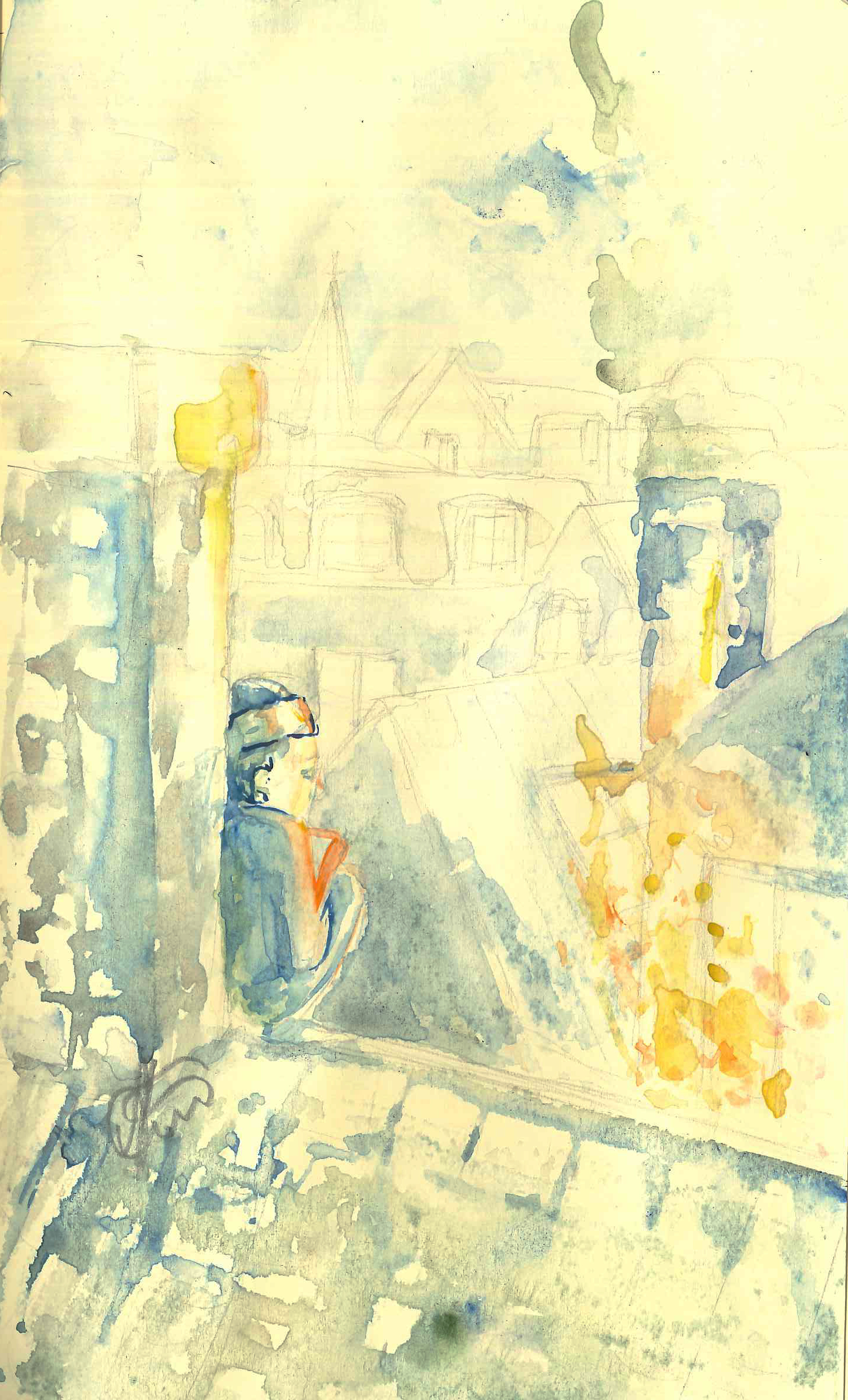
[…] in the middle of the night, the goblin was awoke by a terrible noise and knocking against the window shutters and the house doors, and by the sound of the watchman’s horn; for a great fire had broken out, and the whole street appeared full of flames. Was it in their house, or a neighbor’s? No one could tell, for terror had seized upon all. The huckster’s wife was so bewildered that she took her gold ear-rings out of her ears and put them in her pocket, that she might save something at least. The huckster ran to get his business papers, and the servant resolved to save her blue silk mantle, which she had managed to buy. Each wished to keep the best things they had. The goblin had the same wish; for, with one spring, he was up stairs and in the student’s room, whom he found standing by the open window, and looking quite calmly at the fire, which was raging at the house of a neighbor opposite. The goblin caught up the wonderful book which lay on the table, and popped it into his red cap, which he held tightly with both hands. The greatest treasure in the house was saved; and he ran away with it to the roof, and seated himself on the chimney. The flames of the burning house opposite illuminated him as he sat, both hands pressed tightly over his cap, in which the treasure lay; and then he found out what feelings really reigned in his heart, and knew exactly which way they tended. And yet, when the fire was extinguished, and the goblin again began to reflect, he hesitated, and said at last, “I must divide myself between the two; I cannot quite give up the huckster, because of the jam.”
Der Zwerg Nase, Wilhelm Hauff
La vierge des glaces, H. CH. Andersen
“Have you a beloved one?” asked Rudy; for to have a beloved one was everything to him.
“I have none!” said she, and laughed; but it was as though she was not speaking the truth. “Do not let us take a by-way,” continued she, “we must go more to the left, that way is shorter!”
“Yes, so as to fall down a precipice!” said Rudy; “Do you know no better way, and yet wish to be a guide?”
“I know the road well,” said she, “my thoughts are with me; yours are beneath in the valley; here on high, one must think on the Ice-Maiden, for they say she is not well disposed to mankind!”
“I do not fear her,” said Rudy, “she was forced to let me go when I was a child, so I suppose I can slip away from her now that I am older!”
The darkness increased, the rain fell, the snow came; it shone and dazzled. “Give me your hand, I will help you to ascend!” said the girl, and touched him with icy-cold fingers.
“You help me,” said Rudy, “I do not yet need a woman’s help in climbing!” He strode quickly on, away from her; the snow-shower formed a curtain around him, the wind whistled by him and he heard the young girl laugh and sing; it sounded so oddly! Yes, that was certainly a spirit in the service of the Ice-Maiden. Rudy had heard of them, when he had passed a night on high; when he had crossed the mountain, as a little boy.
La rue
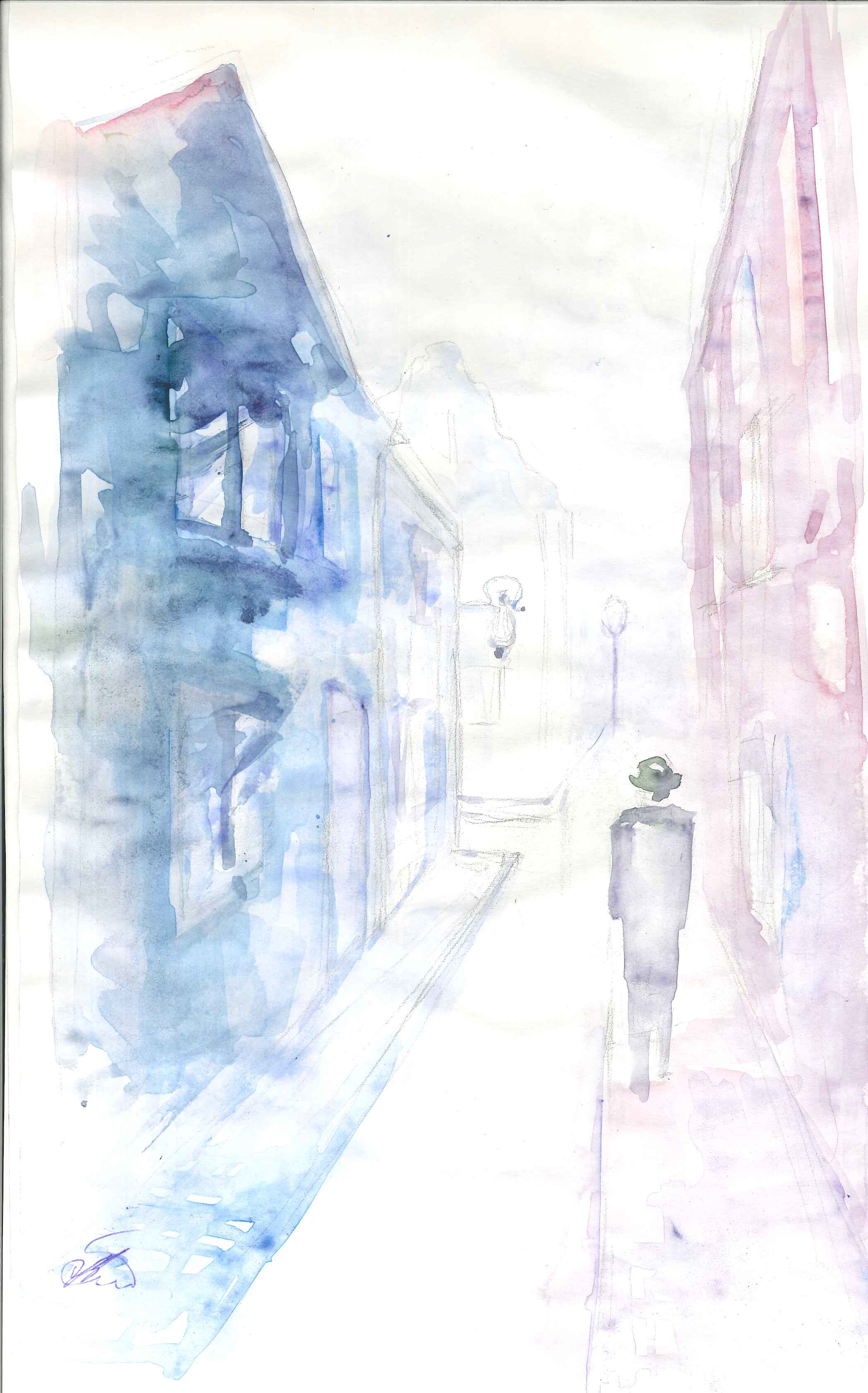
“At the first dawn of the morning we closed all the massy shutters of our old building; lighted a couple of tapers which, strongly perfumed, threw out only the ghastliest and the and feeblest of rays. By reading, writing or conversing, until warned by the clock of the advent of the true Darkness. Then we sallied forth into the streets, arm in arm, continuing the topics of the day, or roaming far and wide until a late hour, seeking, amid the wild lights and shadows of the populous city, that infinity of mental excitement which quiet observation can afford”.
The Murders in the Rue Morgue, Edgar Allan Poe
The Marsh King’s Daughter (II)
She had nothing but a branch of a tree and her two hands, between the fingers of which the webbed skin stretched, and they were torn by the work, while the blood ran down her hands. She saw at last that her work would be useless, more than she could accomplish; so she fetched more water, and washed the face of the dead, and then covered it with fresh green leaves; she also brought large boughs and spread over him, and scattered dried leaves between the branches. Then she brought the heaviest stones that she could carry, and laid them over the dead body, filling up the crevices with moss, till she thought she had fenced in his resting-place strongly enough.
Wilhelm Hauff’s Caliph Stork
La reine des neiges Hans Christian Andersen
A few snowflakes were falling, and the largest flake of all alighted on the edge of one of the flower boxes. This flake grew bigger and bigger, until at last it turned into a woman, who was dressed in the finest white gauze which looked as if it had been made from millions of star-shaped flakes. She was beautiful and she was graceful, but she was ice-shining, glittering ice. She was alive, for all that, and her eyes sparkled like two bright stars, but in them there was neither rest nor peace. She nodded toward the window and beckoned with her hand.


You must be logged in to post a comment.